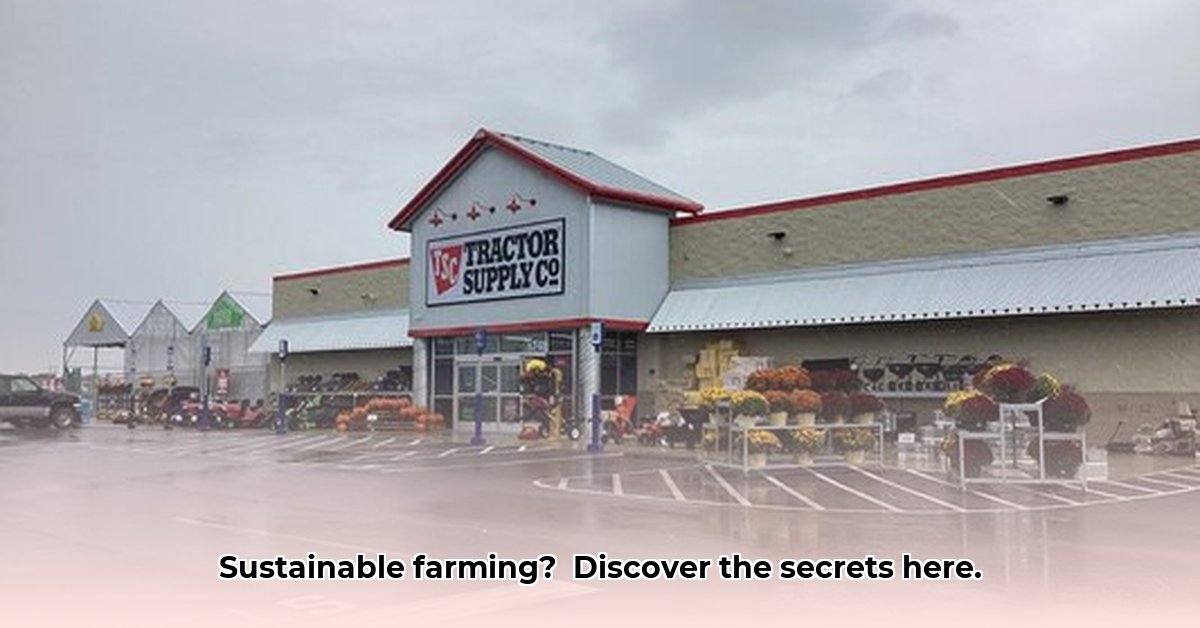
Mercersburg Tractor Supply (MTS) plays a significant, albeit often understated, role in the advancement of sustainable agriculture. Its contribution isn't defined by groundbreaking technology, but rather by the accessibility it provides to everyday tools and materials crucial for environmentally conscious farming practices. This article examines MTS's strengths and weaknesses in supporting sustainable agriculture, offering actionable insights for all stakeholders. For more information on tractor parts and supplies, check out tractor parts.
Easy Access: A Foundation for Sustainable Practices
One of MTS's greatest assets is its widespread accessibility. For small-scale farmers or those new to organic farming, sourcing specialized products like organic seeds or water-saving irrigation systems can be challenging. MTS, with its numerous conveniently located rural stores, offers a one-stop shop, simplifying access to these essential materials. This convenience reduces travel time and fuel consumption, directly contributing to environmental responsibility. How significant is this ease of access? It makes sustainable farming a tangible reality for many, especially those in remote areas.
A quantifiable impact is seen in reduced transportation emissions. Consider a farmer who previously had to travel 50 miles round trip to multiple stores to source organic supplies. Now, with MTS's local presence, that reduces to a minimal single trip. This direct reduction in fuel consumption makes a real difference.
"The accessibility of MTS is transformative for small-scale farmers like myself," says Sarah Miller, owner of Green Valley Organics. "It allows me to easily source the materials needed for sustainable practices without sacrificing time or resources."
Diverse Product Range: Catering to Varied Needs
Beyond accessibility, MTS boasts a remarkable range of products catering to diverse farming styles and needs. Whether it's organic seeds, composting equipment, or animal welfare supplies, the store provides a diverse selection, supporting the transition to more sustainable practices. This broad selection is vital for farmers adopting new methods, offering a seamless transition without the need to source from multiple vendors.
The sheer breadth of their offerings is impressive, offering over 10,000 different sustainable agricultural products nationwide. This diversity truly empowers farmers to adopt a wide array of sustainable techniques.
"The variety of sustainable products available at MTS is unparalleled," states Dr. David Chen, Professor of Agricultural Sustainability at State University. "It’s a vital resource for farmers seeking to transition to more eco-friendly practices."
Areas for Improvement: Transparency and Proactive Engagement
While MTS offers considerable support, improvements are needed. A primary concern is supply chain transparency. Consumers and farmers increasingly demand knowledge about product origins, manufacturing processes, and environmental impact. Without this transparency, it's difficult to thoroughly assess the true sustainability of the products offered.
Furthermore, MTS could enhance its role by proactively promoting sustainable practices. Workshops, educational materials, and partnerships with agricultural experts would not only educate farmers but also foster a stronger commitment to environmentally friendly methods.
How can this lack of transparency be addressed? It calls for increased communication and labeling standards throughout their supply chain. The improvement of this area would significantly bolster MTS’s image and customer loyalty.
Actionable Steps for a Greener Future
Transforming MTS into a more robust champion of sustainable agriculture requires a collaborative approach. The following steps outline actions for key stakeholders:
Mercersburg Tractor Supply: Implement detailed online product sustainability information, publish annual sustainability reports and invest in employee training on sustainable farming practices.
Farmers: Prioritize sustainable product purchases, adopt efficient farming methods and advocate for policies supporting sustainable agriculture.
Consumers: Demand greater transparency from retailers, actively choose eco-friendly products and support businesses committed to sustainability.
Government and Non-Profits: Fund research into sustainable farming's economic and environmental benefits and implement policies that encourage sustainable practices and improve rural resource access.
Reducing Environmental Impact: A Practical Guide for Consumers
The environmental footprint of MTS purchases extends beyond the products themselves, encompassing their entire life cycle. Minimizing this impact requires conscious choices aligned with sustainable practices.
- Research: Investigate product origins and manufacturing processes before purchasing.
- Compare: Choose the most sustainable options by comparing different brands and products.
- Reduce: Minimize consumption by repairing equipment and reusing materials.
- Advocate: Encourage MTS to adopt more sustainable practices through direct communication.
- Educate: Share your knowledge with fellow farmers and consumers to promote collective change.
By embracing these actions, consumers can significantly reduce their environmental footprint and contribute to a more sustainable agricultural system.
The future of sustainable farming hinges on collaborative engagement. MTS, farmers, consumers, and policymakers must work together to create an environmentally friendly and resilient agricultural sector. The journey towards greener practices requires a shared vision, proactive steps, and a steadfast commitment to a healthier planet.